Darwin’s Dogs wants your dog’s DNA

Going for walks, playing fetch and now participating in genetic research are just a few things people and their dogs can do together.

Darwin’s Dogs, a citizen science project headquartered at the University of Massachusetts Medical School in Worcester, is looking for good — and bad — dogs to donate DNA. The project aims to uncover genes that govern behavior, including those involved in mental illness in both people and pets.

Looking to dogs for clues about mental illness isn’t as strange as it may seem. Certain breeds are plagued by some of the same diseases and mental health issues that afflict people. Researchers have learned about the genetics of narcolepsy and obsessive compulsive disorder, as well as cancer, blindness and many other ailments from studying purebred dogs. Studies of purebreds are mainly useful when the problem is caused by mutations in a single gene. But most behaviors are the product of interactions between many genes and the environment. A search for those genes can’t be done with a small number of genetically similar dogs. So, Darwin’s Dogs hopes to gather data on a large number of canines, including many breeds and genetically diverse mutts.
Finding behavior-related genes, such as ones that lead dogs to chew up shoes or engage in marathon fetch sessions, may give clues to genes that affect human behavior. “It seemed to me that if we could understand how [changes in DNA] make a dog so excited about chasing a ball, we could learn something about how our brains work and what goes wrong in psychiatric disease,” says project leader Elinor Karlsson.

Karlsson and colleagues launched darwinsdogs.org, inviting people to answer questions about their dogs’ behavior and share their pets’ DNA. More than 7,000 dog owners have already signed up, and the researchers are still recruiting new volunteers.

The process is simple and can be done alone with your dog, or even as a family activity. First, take an online quiz about your canine companion. The quiz is divided into multiple sections. Some sections gather basic information about your dog’s appearance, exercise and eating habits; others ask about simple behaviors, such as whether your dog crosses its front paws when lying down or tilts its head. (Some questions are philosophical puzzles like whether your dog knows it is a dog.) Each question has a comment box in case you want to explain an answer. Plan to spend at least half an hour completing the questionnaire.

Once the questions are answered and the dog is registered, researchers send you a DNA sampling kit that comes with written instructions and an easy-to-follow picture guide. The kit contains a large sterile cotton swab for collecting DNA from your dog’s mouth. (It’s an easy procedure for the human involved, and Sally, the 14-year-old Irish setter “volunteer” Science News sampled, was rather stoic.) Also included is a tape measure for recording your dog’s height, length, nose and collar size. When you’re done, just seal the sample, measurement sheet and consent form inside the return mailer and drop it in a mailbox.

Dog owners don’t need to pay a fee to participate, but they do need patience, Karlsson says. It takes time to analyze DNA, and the researchers can’t say exactly how long it will be before owners (and Science News) learn their dogs’ results. These results will include the dog’s raw genetic data as well as information about the dog’s possible ancestry. Knowing ancestry or particular mutations a dog carries may help veterinarians personalize a dog’s care.
Dog trainers are being enlisted to give owners feedback on their dogs’ personalities and to suggest activities the dogs may enjoy. Karlsson hopes to create a way for impatient owners who are willing to donate money to the project to get their reports back faster.
FDA bans chemicals in antibacterial soaps

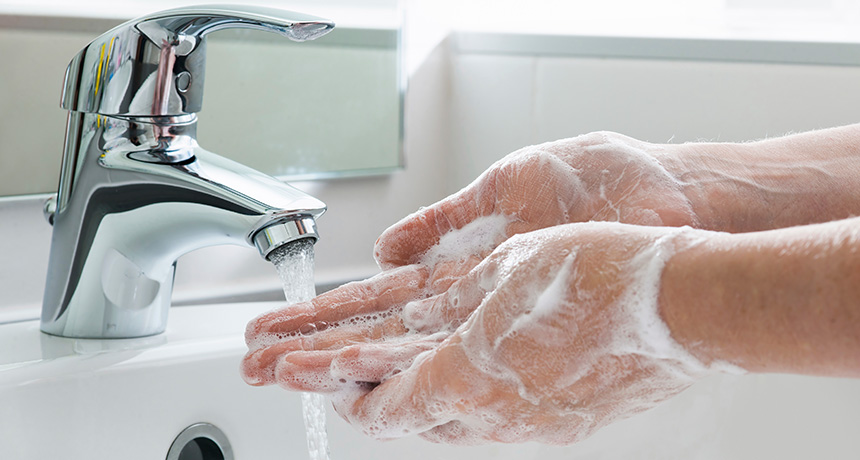
As of today, antibacterial soaps have a short shelf life. The U.S. Food and Drug Administration has banned soap products containing 19 active ingredients, including the notorious chemical triclosan, marketed as antiseptics.

While the term “antibacterial” suggests to consumers that such soaps prevent the spread of germs, evidence suggests otherwise. After asking companies to submit data on the safety and efficacy of their products back in 2013, the FDA noted in its September 2 final ruling that manufacturers failed to prove that these products were safe to use every day or that they were more effective than plain old soap and water at cutting infectious microbes.

“In fact, some data suggests that antibacterial ingredients may do more harm than good over the long-term,” Janet Woodcock, director of the FDA’s Center for Drug Evaluation and Research, said in a statement.

Triclosan, in particular, has a pretty bad rap. Found in many household products, the chemical ends up everywhere from vegetables to our snot. It’s been associated with exposure to toxic compounds, risk of staph infections and mucking up sewage treatment. Over a decade of damning data had already prompted some companies to remove triclosan from their products. Others will have a year to remove it and other newly banned ingredients from their recipes.

The FDA ban does not include antibacterial hand sanitizers, which the agency is evaluating separately. In the meantime, the FDA recommends using hand sanitizers that are at least 60 percent alcohol, or washing with old-school soap and water.

Readers contemplate aging research

Live long and prosper
In Science News’ special report on a­ging (SN: 7/23/16, p. 16), writers Laura Sanders, Tina Hesman Saey and Susan Milius explored the latest research — from the evolution of aging in the animal kingdom to scientists’ quest to delay the process in humans’ bodies and minds.

“I would very much like to know how research into aging may benefit people who are middle-aged or elderly now?” asked leftysrule200 in a Reddit Ask Me Anything about the special report. “Is there any research that can result in treatments in the very near future, or are the real-world applications only going to be visible in the distant future?”
Middle-aged and elderly people will be the first to benefit from aging research, Saey says. “A clinical trial using the diabetes drug metformin as an antiaging therapy will begin soon. That drug will be tested on healthy people aged 60 and older,” she says.

Sanders cautions that most antiaging treatments are still a long way off. But various studies in rodents and humans provide potential clues to aging’s secrets. Blood from young rats, for instance, has been shown to rejuvenate the bodies and brains of old rats. Based on those findings, a clinical study in humans is now under way that is looking at the effects of plasma from young donors on the brains of people with Alzheimer’s. “If scientists could pinpoint the compounds that give young blood its power, then they could presumably develop drugs that mimic that process,” Sanders says.
In the meantime, people may be able to slow the effects of aging by leading a healthy lifestyle. Sanders points to a long-term study of middle-aged women in Australia. Women who were more physically active had sharper memories 20 years later, the researchers found. Until proven antiaging treatments are available, “it seems that keeping the body physically active and strong is one of the best ways to keep your brain sharp as you age,” she says.
Dino spills its guts
Tiny tracks discovered in the blackened stomach contents of a 77-million-year-old duck-billed dinosaur fossil suggest gut parasites infected dinosaurs, Meghan Rosen reported in “Parasites wormed way into dino’s gut” (SN: 7/23/16, p. 14).

Online reader Jim Stangle Dvm thought the worms may not have been parasites at all. “It is more likely that the tunnels were formed by a scavenger worm [after the dino had died]. Still I think the findings are way cool!” he wrote.

It’s hard to say definitively whether the burrows were made by parasites or not, says paleontologist Justin Tweet. Scavenger worms could have tunneled through the gut after the dino’s death, but his team found only one type of worm burrow “which suggests that either only one kind of scavenger had access to the carcass,” or “that these burrows were an inside job,” Tweet says.

That’s no moon!
A recently discovered asteroid appears to orbit Earth, but that’s just an illusion. The asteroid orbits the sun, but its constant proximity to Earth makes it the planet’s only known quasisatellite, Christopher Crockett reported in “Say What? Quasi­satellite” (SN: 7/23/16, p. 5).

Reader Mike Lieber wondered if the moon could also be a quasisatellite. “The gravitational attraction of the sun on the moon is twice that of the Earth,” he wrote. “It seems that the apparent looping of the moon around the Earth is also illusory.”

The moon is a true satellite, Crockett says. If the sun were to dis­appear, the moon would continue orbiting Earth. “The moon is within Earth’s ‘Hill sphere,’ the volume of space in which Earth’s gravity is the dominant influence,” he says. “The strength of the gravitational force isn’t as important as by how much it changes from one place to another.” Given the moon’s proximity to our planet, Earth prevails. “The moon orbits Earth and the Earth-moon s­ystem orbits the sun,” he says.

It’s time to retire the five-second rule

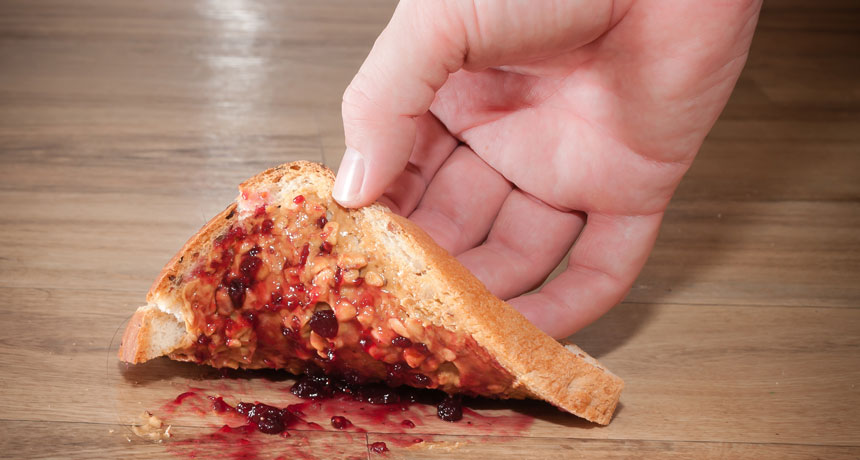
For some dropped foods, the five-second rule is about five seconds too long. Wet foods, such as watermelon, slurp up floor germs almost immediately, scientists report online September 2 in Applied and Environmental Microbiology.

Robyn Miranda and Donald Schaffner of Rutgers University in New Brunswick, N.J., tested gummy candy, watermelon and buttered and unbuttered bread by dropping morsels onto various surfaces coated with Enterobacter aerogenes bacteria. Food was left on each surface — stainless steel, ceramic tile, wood and carpet — for time periods ranging from less than a second to five minutes. Afterward, the researchers measured the amount of E. aerogenes on the food, harmless bacteria that share attachment characteristics with stomach-turning Salmonella.

As expected, longer contact times generally meant more bacteria on the food. But the transfer depended on other factors, too. Carpet, for instance, was less likely to transfer germs than the other surfaces. Gummy candies, particularly those on carpet, stayed relatively clean. But juicy watermelon quickly picked up lots of bacteria from all surfaces in less than a second. These complexities, the authors write, mean that the five-second rule is probably a rule worth dropping.

After Big Bang, shock waves rocked newborn universe

Shock waves may have jolted the infant cosmos. Clumpiness in the density of the early universe piled up into traveling waves of abrupt density spikes, or shocks, like those that create a sonic boom, scientists say.

Although a subtle effect, the shock waves could help scientists explain how matter came to dominate antimatter in the universe. They also could reveal the origins of the magnetic fields that pervade the cosmos. One day, traces of these shocks, in the form of gravitational waves, may even be detectable.
Scientists believe that the early universe was lumpy — with some parts denser than others. These density ripples, known as perturbations, serve as the seeds of stars and galaxies. Now, scientists have added a new wrinkle to this picture. As the ripples rapidly evolved they became steeper, like waves swelling near the shore, until eventually creating shocks analogous to a breaking wave. As a shock passes through a region of the universe, the density changes abruptly, before settling back down to a more typical, slowly varying density. “Under the simplest and most conservative assumptions about the nature of the universe coming out of the Big Bang, these shocks would inevitably form,” says cosmologist Neil Turok of the Perimeter Institute for Theoretical Physics in Waterloo, Canada.

In a paper published September 21 in Physical Review Letters, Turok and Ue-Li Pen of the Canadian Institute for Theoretical Astrophysics in Toronto performed calculations and simulations that indicate shocks would form less than one ten-thousandth of a second after the Big Bang.

“It’s interesting that nobody’s actually noticed that before,” says cosmologist Kevork Abazajian of the University of California, Irvine. “It’s an important effect if it actually happened.”

These shocks, Turok and Pen found, could produce magnetic fields, potentially pointing to an answer to a cosmological puzzle. Magnetic fields permeate the Milky Way and other parts of the cosmos, but scientists don’t know whether they sprang up just after the birth of the universe or much later, after galaxies had formed. Shock waves could explain how fields might have formed early on. When two shocks collide, they create a swirling motion, sending electrically charged particles spiraling in a way that could generate magnetic fields.
Shocks could also play a role in explaining why the universe is made predominantly of matter. The Big Bang should have yielded equal amounts of matter and antimatter; how the cosmic scales were tipped in matter’s favor is still unexplained. Certain theorized processes could favor the production of matter, but it’s thought they could happen only if temperatures in the universe are uneven. Shocks would create abrupt temperature jumps that would allow such processes to occur.

Scientists may be able to verify these calculations by detecting the gravitational waves that would have been produced when shocks collided. Unfortunately, the gravitational ripples produced would likely be too small to detect with current technologies. But under certain theories, in which large density fluctuations create regions so dense that they would collapse into black holes, the gravitational waves from shocks would be detectable in the near future. “If there was anything peculiar in the early universe, you would actually be able to detect this with upcoming technology,” says Abazajian. “I think that is remarkable.”

Out-of-sync body clock causes more woes than sleepiness

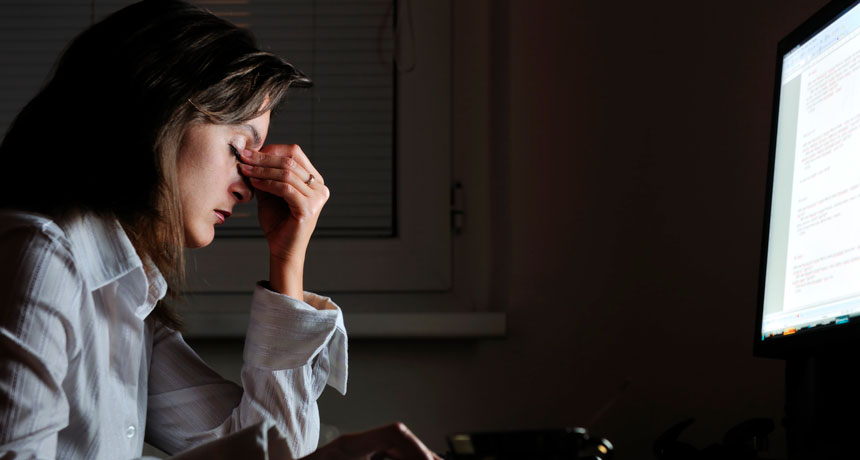
When the body’s internal sense of time doesn’t match up with outside cues, people can suffer, and not just from a lack of sleep.

Such ailments are similar in a way to motion sickness — the queasiness caused when body sensations of movement don’t match the external world. So scientists propose calling time-related troubles, which can afflict time-zone hoppers and people who work at night, “circadian-time sickness.” This malady can be described, these scientists say, with a certain type of math.
The idea, to be published in Trends in Neurosciences, is “intriguing and thought-provoking,” says neuroscientist Samer Hattar of Johns Hopkins University. “They really came up with an interesting idea of how to explain the mismatch.”

Neuroscientist Raymond van Ee of Radboud University in the Netherlands and colleagues knew that many studies had turned up ill effects from an out-of-whack circadian clock. Depression, metabolic syndromes and memory troubles have been found alongside altered daily rhythms. But despite these results, scientists don’t have a good understanding of how body clocks work, van Ee says.

Van Ee and colleagues offer a new perspective by using a type of math called Bayesian inference to describe the circadian trouble. Bayesian inference can be used to describe how the brain makes and refines predictions about the world. This guesswork relies on the combination of previous knowledge and incoming sensory information (SN: 5/28/16, p. 18). In the case of circadian-time sickness, these two cues don’t match up, the researchers propose.

Some pacemaking nerve cells respond directly to light, allowing them to track the outside environment. Other pacemakers don’t respond to light but rely on internal signals instead. Working together, these two groups of nerve cells, without any supervision from a master clock, can set the body’s rhythms. But when the two timekeepers arrive at different conclusions, the conflict muddies the time readout in the body, leading to a confused state that could cause poor health outcomes, van Ee and colleagues argue.

This description of circadian-time sickness is notable for something it leaves out — sleep. While it’s true that shifted sleep cycles can cause trouble, a misalignment between internal and external signals may cause problems even when sleep is unaffected, the researchers suggest. That runs counter to the simple and appealing idea that out-of-sync rhythms cause sleep deprivation, which in turn affects the body and brain. That idea “was totally linear and beautiful,” Hattar says. “But once you start looking very carefully at the data in the field, you find inconsistencies that people ignored.”
It’s difficult to disentangle sleep from circadian misalignments, says neuroscientist Ilia Karatsoreos of Washington State University in Pullman. Still, research by him and others has turned up detrimental effects from misaligned circadian rhythms — even when sleep was normal. This new paper helps highlight why “it is important to be able to study and understand the contribution of each,” he says.

The concept of circadian-time sickness is an idea that awaits testing, Karatsoreos cautions. Yet it’s a “useful way for us to talk about this general problem, if only for the fact that it’s a way of thinking that I’ve really never seen before.”

Climate change shifts how long ants hang on to coveted real estate

Heating small patches of forest shows how climate warming might change the winner-loser dynamics as species struggle for control of prize territories. And such shifts in control could have wide-ranging effects on ecosystems.

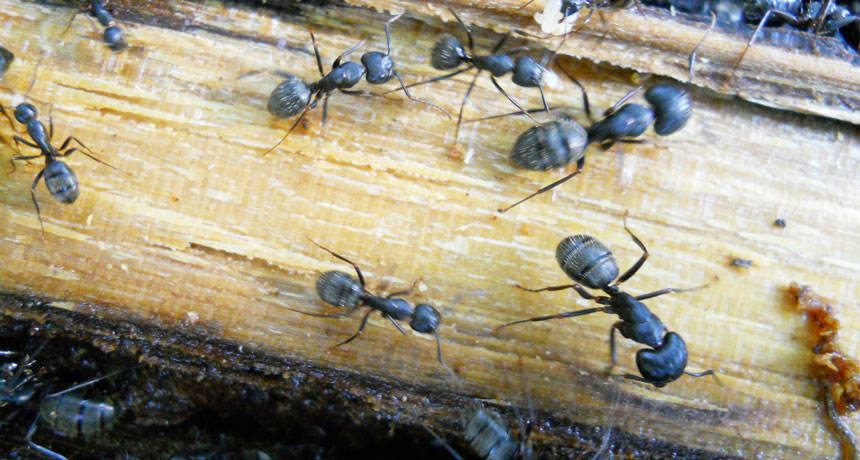
The species are cavity-nesting ants in eastern North America. Normally, communities of these ant species go through frequent turnovers in control of nest sites. But as researchers heated enclosures to mimic increasingly severe climate warming, the control started shifting toward a few persistent winners. Several heat-loving species tended to stay in nests unusually long, instead of being replaced in faster ant upheavals, says Sarah Diamond of Case Western Reserve University in Cleveland.
That’s worrisome not only for the new perpetual losers among ants but for the ecosystem as a whole, she and her colleagues argue October 26 in Science Advances. Ants have an outsized effect on ecosystems. They churn up soil, shape the flow of nutrients and disperse seeds to new homes. Ant species that can’t compete in a warmer climate may blink out of the community array, with consequences for other species they affect.

Teasing out the indirect effects of climate change has been difficult. “We’ve all sort of thrown up our hands and said probably these interactions are quite important, but they’re really hard to measure so we’re just going to ignore that for now,” Diamond says.
Experiments have begun tackling those interactions, and the ant enclosures were among the most ambitious. At each of two experimental sites — in North Carolina and Massachusetts — researchers set up 15 roomy plots to mimic various warming scenarios, from 1.5 degrees Celsius above the surrounding air temperature to an extra 5.5 degrees C. To install outdoor heating, “we had backhoes in there digging trenches,” Diamond says. Giant propane tanks fueled boilers that forced warmer air into the enclosures to heat the soil. Computers monitored soil temperature and fine-tuned air flow.
At least 60 species of local ants came and went naturally, some of them nesting in boxes the researchers placed in the enclosures. For five years, the researchers regularly monitored which common species were living in the boxes.
Warmth gave an edge to a few heat-tolerant species such as Temnothorax longispinosus in the forest in Massachusetts. This tiny ant can build colonies inside an acorn and is a known target for attacks by slavemaker ants that invade nests instead of establishing their own. With increased warming, however, it and a few other heat-loving ants tended to hold their nests longer.

Those longer stints destabilize the ant community with its usual faster pace of turnovers of nests, which typically gives more species a chance at decent shelter and better luck in surviving in the community. What’s more, the analysis showed that the more a plot was heated, the more time the ants would need after some disturbance to return to the equilibrium of their usual affairs.

“A key strength of this study is their regular sampling,” says Jason Tylianakis, who holds joint appointments at the University of Canterbury in New Zealand and Imperial College London. Those data gave the scientists an unusually detailed picture of subtle community effects, he says.

The authors have “documented a new consequence of temperature change on communities,” says marine ecologist Sarah Gilman of the Claremont Colleges in California. Other studies have talked about climate change pushing communities to dramatically new, but ultimately stable states. But the ant experiment shows that climate change may be undermining the stability of communities that, at least for the moment, still look fairly normal.

Marijuana use weakens heart muscle

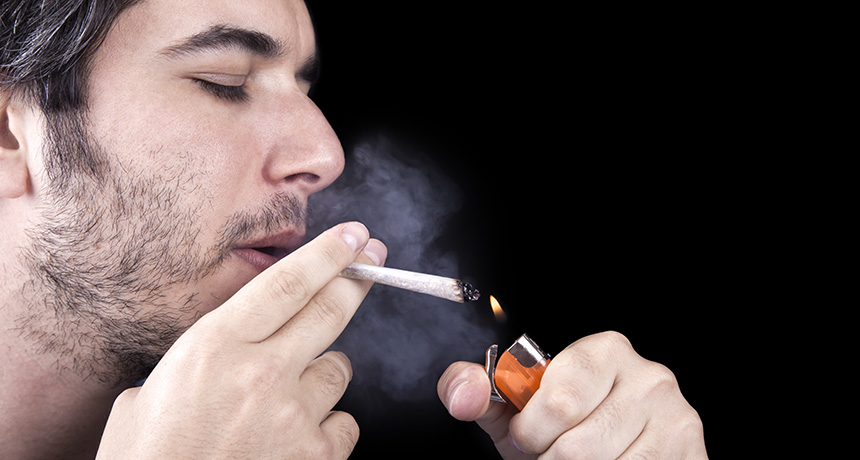
NEW ORLEANS — Marijuana use is associated with an almost doubled risk of developing stress cardiomyopathy, a sudden life-threatening weakening of the heart muscle, according to a new study. Cannabis fans may find the results surprising, since two-thirds believe the drug has no lasting health effects. But as more states approve recreational use, scientists say there’s a renewed urgency to learn about the drug’s effects.

An estimated 22 million Americans — including 38 percent of college students — say they regularly use marijuana. Previous research has raised cardiovascular concerns: The drug has been linked to an increased risk of heart attack immediately after use, and a 2016 study in rodents found that one minute of exposure to marijuana smoke impairs the heart’s inner lining for 90 minutes, longer than tobacco’s effect.

The new study, presented November 13 during the American Heart Association’s Scientific Sessions, examined the occurrence of stress cardiomyopathy, which temporarily damages the tip of the heart. Researchers from St. Luke’s University Health Network in Bethlehem, Pa., searched a nationwide hospital database and found more than 33,000 admissions for stress cardiomyopathy from 2003 to 2011. Of those, 210 were identified as marijuana users, and had about twice the odds of developing the condition, said Amitoj Singh, who led the study. Young men were at highest risk and more likely to go into cardiac arrest despite having fewer cardiovascular risk factors. Notably, the number of marijuana-linked cardiomyopathies increased every year, from 17 in 2007 to 76 in 2011. “With recent legalization, I think that’s going to go up,” Singh said.

A Pap smear can scoop up fetal cells for genome testing

Scanning a fetus’s genome just a few weeks after conception may soon be an option for expecting parents. Mom just needs to get a Pap smear first.

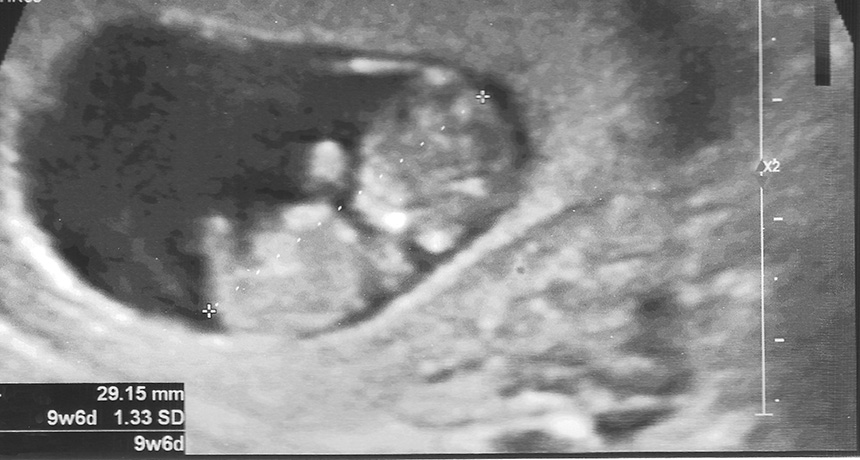
By scraping a woman’s cervix as early as five weeks into a pregnancy, researchers can collect enough fetal cells to test for abnormalities linked to more than 6,000 genetic disorders, researchers report November 2 in Science Translational Medicine. It’s not clear exactly how fetal cells make their way down to the cervix, says study coauthor Sascha Drewlo of Wayne State University School of Medicine in Detroit. But the cells may invade mom’s mucus-secreting glands, and then get washed into the cervical canal.

Current prenatal tests include amniocentesis and chorionic villus sampling, but they work later in pregnancy: at least 12 weeks for amnio and at least nine weeks for CVS. Amnio requires a long needle threaded through a pregnant woman’s belly and uterus; CVS often does, too. Instead, Drewlo’s team gathered fetal trophoblast cells, which give rise to the placenta, and were able to examine the genomes of 20 fetuses.

The new technique, which can work with as few as 125 fetal cells, could one day help physicians care for their tiniest patients. For some genetic conditions, such as congenital adrenal hyperplasia, early detection means mom can take some medicine to “actually treat the fetus in utero,” Drewlo says.

Gaggle of stars get official names

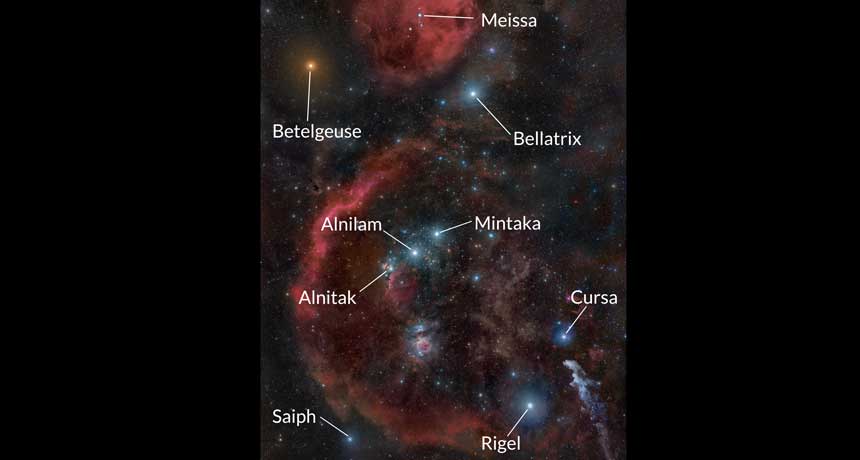
For centuries, stargazers have known which star was Polaris and which was Sirius, but those designations were by unofficial tradition. The International Astronomical Union, arbiter of naming things in space, has now blessed the monikers of 227 stars in our galaxy. As of November 24, names such as Polaris (the North Star) and Betelgeuse (the bright red star in Orion) are approved.

Until now, there has been no central star registry or guidelines for naming. There are many star catalogs, each one designating stars with different combinations of letters and numbers. That excess of options has left most stars with an abundance of labels (HD 8890 is one of over 40 designations for Polaris).

The tangle of titles won’t disappear, but the new IAU catalog is a stab at formalizing the more popular names. Before this, only 14 stars (included in the 227) had been formally named, as part of the IAU’s contest to name notable exoplanets and the stars that they orbit (SN: 2/6/16, p. 5). One famous star is returning to its ancient roots. The brightest member of Alpha Centauri, the pair of stars that are among the closest to our solar system, is now officially dubbed Rigil Kentaurus, an early Arabic name meaning “foot of the centaur.”