China-ASEAN cooperation under BRI provides tangible benefits for region, gives impetus for future growth: Secretary-General of the ASEAN-China Center
Editor's Note:

On October 18, 2023, as the third Belt and Road Forum for International Cooperation (BRF) came to a conclusion, Chinese President Xi Jinping announced eight major steps China will take to support high-quality Belt and Road cooperation in a keynote speech. Benefiting over 150 countries, the Belt and Road Initiative (BRI) has become the most popular international public good and largest international cooperation platform in today's world.

The year 2023 marks the 10th anniversary of the BRI and 10th year since China first proposed building a closer China-ASEAN community of shared future. The ASEAN is the priority and key region for the implementation of the BRI, and is an active respondent and beneficiary of the framework. 

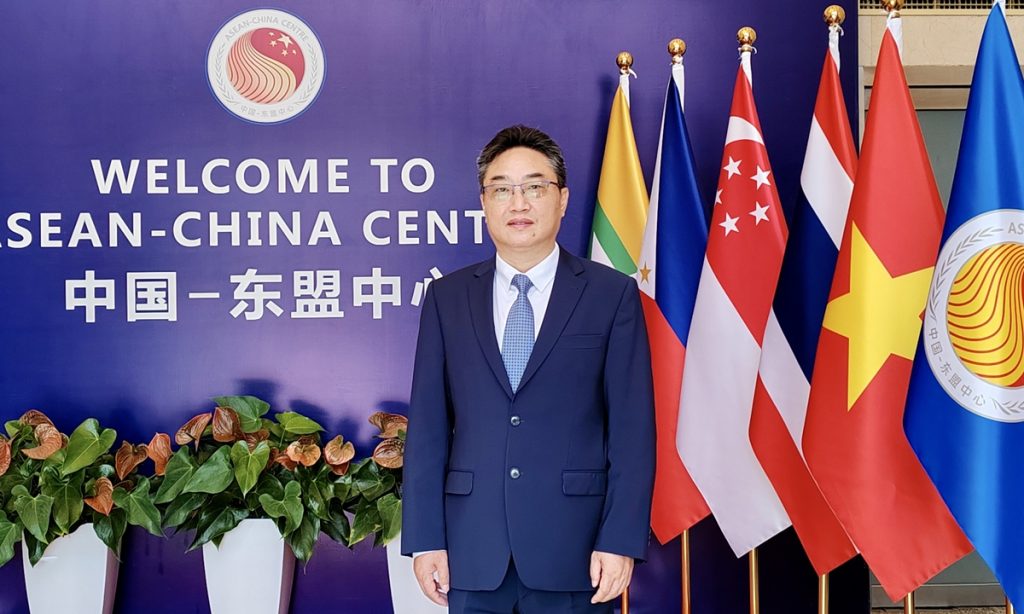
In a recent interview with the Global Times reporter Wang Qi (GT), Shi Zhongjun (Shi), the Secretary-General of the ASEAN-China Center (ACC), said ASEAN members highly value the tremendous achievements made with China under the BRI over the last decade, which has brought tangible benefits to ASEAN people and has been sincerely welcomed by them as a road to development and prosperity. He said ASEAN members generally look forward to the continued promotion of mutually beneficial cooperation, rather than becoming geopolitical pawns. All-round cooperation between China and ASEAN has also injected more positive energy into regional and global peace, stability, and prosperity amid global uncertainties and chaos.

GT: How do you interpret the outcome of the Third Belt and Road Forum for International Cooperation (BRF) and what is the response from ASEAN members? 

Shi:
 The third BRF has just been successfully concluded, with representatives from 151 countries and 41 international organizations participating, and more than 10,000 registered participants, which fully demonstrates that the BRI has taken root in people's hearts worldwide, and the global influence of the concept is increasing. 

President Xi Jinping met with heads of state, including leaders of ASEAN members, to reaffirm the broad consensus to continue to build a high-quality BRI. A total of 458 outcomes were delivered during the BRF and 369 practical collaboration projects have been inked, of which nearly 80, or more than one-fifth, are related to ASEAN members. These outcomes have drawn a new blueprint, opened a new phase, and injected new momentum into the BRI's future.

I've noticed that the leaders of the participating ASEAN members highly value the tremendous achievements made in the last 10 years of the joint construction of the BRI. They have expressed their willingness to continue to participate in the BRI, and hope that more pragmatic projects that are beneficial to the people will be implemented. They also welcome more Chinese investment to maintain the positive momentum of high-quality and inclusive development.

GT: What can we expect from future cooperation between China and the ASEAN, and what roles can the ACC play in this regard?

Shi:
 China and ASEAN members will work together to implement the important outcomes of the BRF. 

First, we will further promote the BRI to dovetail with the Master Plan on ASEAN Connectivity 2025, and the development strategies of each ASEAN member. Second, we will continue to strengthen infrastructure development in railways, highways, ports, airports, electricity, and communications to build a three-dimensional network of connectivity. Third, we will further enhance economic and trade exchanges, stabilize and smooth the supply chain and industrial chain, and cultivate new growth points for cooperation in emerging areas such as the digital economy, green transformation, and scientific and technological innovation. 

Regarding promoting policy communication, the ACC will continue to maintain close communication with government departments and embassies of China and ASEAN members, and promote exchanges and docking of policies through co-organizing briefings and other activities.

In terms of promoting trade, the ACC will continue to build platforms, actively matchmaking enterprises and products from both sides to enter each other's markets, inviting ASEAN business to participate in economic and trade activities in China, and organizing face-to-face exchanges between governments, businessmen, and enterprises from the two sides, so as to facilitate the landing of more projects.

When it comes to promoting people-to-people exchanges, the ACC will continue to actively carry out exchange projects in the fields of education, culture, youth, tourism, and media between China and the ASEAN, to promote tourism recovery, and cultivate a positive atmosphere of public opinion for the China-ASEAN relationship.

GT: How do you view the cooperation between China and the ASEAN under the BRI in the last decade? What does it mean for the development of ASEAN members?

Shi: 
China and most ASEAN members are developing countries, which makes development a common goal for both sides. Over the last decade, China and ASEAN members have continuously strengthened their strategic synergizing, and have achieved fruitful results and joined hands to build a high-quality BRI model.

China and all 10 ASEAN members have signed bilateral cooperation documents on the joint construction of the BRI. The two sides have been each other's largest trading partner for three consecutive years and are accelerating version 3.0 of the China-ASEAN free trade agreement.

Facts have proven that the joint construction of the BRI has brought ASEAN members greater opportunities for cooperation and development dividends, as well as a greater sense of gain and happiness to the people on both sides.

For instance, the China-Laos Railway. It has been hailed by the Lao people as a "landmark project" that has transformed Laos from a "land-locked country" to a "land-linked country." 

The railway has been in stable operation for 22 months, carrying more than 20 million passengers and 26.8 million tons of goods. Through the railway, fresh fruits from Southeast Asia can be delivered to Chinese consumers in a shorter period of time and at a lower cost. The project has provided more than 110,000 jobs for the Lao people and trained local technical and managerial staff, leading to the economic and social development of Laos.

GT: Since you became the Secretary-General of the ACC in September 2022, you have visited a number of ASEAN members. What are the attitudes and feelings of ASEAN members toward China and the BRI? What has impressed you the most after one year in office?

Shi:
 This year, I have visited six ASEAN members, including Singapore, Indonesia, Malaysia, the Philippines, Cambodia, and Myanmar, and met with high-level officials from the foreign affairs, economic and trade, investment, education, culture, and tourism departments of the host countries, as well as exchanging views with people from all walks of life, such as local chambers of commerce, universities, think tanks, and the media. 

I feel that all sectors of ASEAN members welcome the BRI and highly appreciate the results achieved. ASEAN members generally believe that jointly building the BRI can improve the infrastructure of ASEAN members, narrow the development gap between regions, promote the region's post-COVID recovery, and effectively benefit the local people.

I have a deep impression that locals often talk about two BRI projects. The first is the Jakarta-Bandung High-Speed Railway, which has just come into operation. 

When I was in Jakarta, many local people said to me, "In the 1990s, it took a whole day to go to Bandung, but now it only takes 40 minutes through the high-speed railway, which is incredible!" 

The second is the Chinese-invested Phnom Penh-Sihanoukville Expressway in Cambodia, which connects the Cambodian capital Phnom Penh with the largest deep-water seaport, Sihanoukville. Locals in Phnom Penh say that it takes more than 5 hours to drive between the two places, but now it takes less than 2 hours, which brings great convenience to people.

At the same time, some media sources and think tanks in ASEAN members have told me that some ordinary people still do not have a comprehensive understanding of the BRI. In the future, the two sides should carry out more economic and livelihood projects, especially small but practical projects, so that more people in the ASEAN can share the dividends of the BRI. 

GT: Under the US "Indo-Pacific Strategy," more external factors are intervening in the Asia-Pacific region. What is the importance of practical cooperation between China and the ASEAN under the BRI to maintain the peace, stability, and prosperity of the region?

Shi:
 China-ASEAN cooperation under the BRI has brought tangible benefits to ASEAN people and has been sincerely welcomed by them as a way to development and prosperity. ASEAN members generally look forward to continuing to promote mutually beneficial cooperation, rather than becoming geopolitical pawns. Regional countries are well aware of the motives and intentions of the interfering external forces.

At present, the recovery of the global economy from the pandemic is still generally weak, while the geopolitical situation is still strained and chaotic, with the issues of inflation, environment, food, and energy security still complex and grim. This poses a number of challenges to regional peace and stability.

The jointly construction of BRI has allowed for a large number of infrastructure projects to take root in the ASEAN, which not only improves local production and the living environment, but also effectively reduces the cost of participation in international trade for ASEAN members, strengthens their ability to integrate into the world economy, and stimulates the region's potential for greater development.

In addition, China and the ASEAN have been cooperating on trade facilitation, accelerating the process of regional economic integration, promoting the stability and smooth flow of the regional and global industrial chain supply chain, and injecting strong impetus into a steady recovery after the global pandemic.

In general, the all-round cooperation between China and the ASEAN under the BRI has injected more positive energy into regional and global peace, stability, and prosperity, and has become the greatest certainty amid current global uncertainties.

GT: What are the lessons that partners can learn from the successful China-ASEAN cooperation under the BRI?

Shi:
 China and ASEAN members are natural fellow travelers in the construction of the BRI, and have been working hand in hand for 10 years, achieving fruitful results along the way and bringing great benefits to the people of both sides. I believe that there are at least three aspects of experience that are worth learning from:

First, focusing on strategic synergizes. Over the last decade, the BRI has not only been designed to dovetail with the Master Plan on ASEAN Connectivity 2025, but also has been customized to dovetail with the development strategies of each ASEAN member. 

Second, we insist on mutual benefit and win-win cooperation. China and ASEAN members have been practicing the principle of joint construction and sharing and have deepened cooperation in these fields with complementary advantages.  

Third, it's always keeping pace with the times. Both sides attach importance to "hard connectivity" in infrastructure, "soft connectivity" in education, culture, and tourism, and now, the "new connectivity" in green, digital, and artificial intelligence. 

The core idea is to ensure that cooperation remains at the forefront of innovation, leading the trend, and truly benefiting the region.

Despite slander from West, China positions itself for higher levels of development

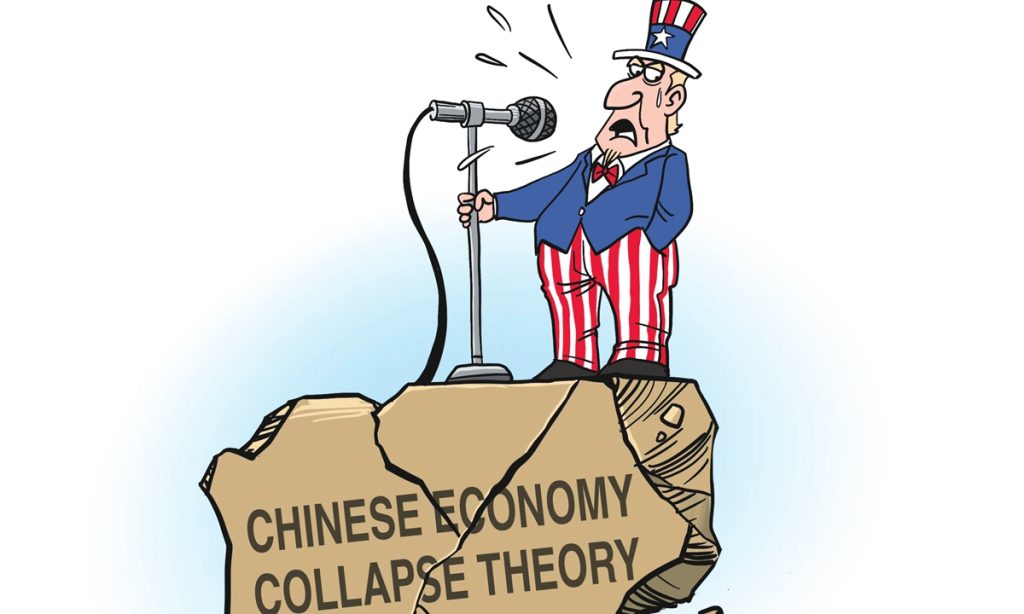
Since the beginning of this year, there have been a growing number of false allegations from the West. They have consistently propagated the idea that the Chinese economy is teetering on the edge of imminent decline and collapse. These discussions have gone so far as to suggest strategies for managing this perceived crisis, portraying China's economy as being in deep peril and posing an increasing risk to global economic development.

There are several underlying factors that contribute to this trend. There have been major challenges and adjustments in the Chinese economy following the pandemic, particularly in light of threats from the US and many Western countries regarding their decoupling or de-risking from China and disrupting the supply chain. This approach is largely driven by the perception in the US that China is a competitor, adversary or even an enemy.

Additionally, many Western countries have been discussing a decline in Chinese export orders and import volumes, which is indeed true. This is primarily a result of the extreme interference of the US and several other countries in China's economic cooperation. 

However, if you actually come to China, you'll find a landscape of normal economic development with no significant disruptions to people's livelihoods. Chinese society exhibits a high level of solidarity and unity, and China still serves as an attractive destination for foreign investment.

Furthermore, in terms of economic development, China is increasingly driven by technological innovation and breakthroughs. A recent example is the launch of Huawei's Mate 60 Pro smartphone, which is said to utilize 100-percent proprietary technologies and chips designed and manufactured in China. This clearly shows that the Chinese economy stands on the cusp of another revolution, positioning itself for higher levels of economic development.

Looking ahead, China's huge amount of data and continuous breakthroughs in the semiconductor industry, coupled with powerful algorithms to drive the digital economy, position China at the forefront of technological development.

China's continued growth is undeniable, with expectations of a 5.5-percent GDP growth this year, far surpassing that of the US and many other developed countries. This demonstrates the strength of China's economy and dispels any baseless claims of its imminent collapse, revealing the ulterior motives behind such false allegations. 

This sheds light on the decision-making process in the US that Washington appears to conflate two concerns into one nightmare. First, they fret about China overtaking the US economically in the near future. Second, they worry that once China becomes larger and more influential, it might impose its political system, ideology and ways of doing things on the US. Consequently, they seek to provoke actions aimed at disrupting China's economic development and advocate for decoupling from China.

I've previously stated that decoupling between China and the US is similar to any attempt to decouple the earth and the moon - both a mission impossible and a potentially catastrophic endeavor. Moreover, portraying China as a risk in itself is misguided. China is not a risk; it has significant opportunities. Attempting to de-risk entirely is impossible, as risks and opportunities are inherent in every country and everywhere in the world.

The US needs to come to terms with the fact that China's economy may eventually surpass that of the US. Regardless of their actions, wishes or fantasies, China's economic development will persist. Furthermore, it's important to note that China will not seek hegemony when it becomes stronger, whether in the past, at present or in the future. China will not impose its political system or ways of doing things on other nations. Instead, China aims to promote win-win economic development.

Therefore, the US' concerns about China becoming the next "top dog" in the world and taking over the hegemony position of the US are unfounded and reflect their own anxieties and ambitions. The world is vast enough to accommodate both China and the US, as well as many other countries. "To live" and "let live" will be a mega trend for China and the US.

I have confidence in China's ongoing development. In recent years, China's economic development has contributed approximately one-third of the world's additional GDP growth. I believe that China will maintain this momentum and continue to make significant contributions to global economic development. China is not in deep trouble; it is growing rapidly and robustly.

I urge everyone to have as much trust and confidence in China's economic development as I do. Let's be realistic - the Chinese economy will not only continue to develop but also may eventually surpass that of the US. Nothing will change in the world at that time, and the world will be multipolar. 

The author is a guest professor at the Law School of Suzhou University and Vice President of the Center for China and Globalization.

Provocative Western politicians, secessionists in Taiwan must stop mutual exploitation

Since last year, lawmakers, former officials and local officials from countries like the US, the Czech Republic, Lithuania, Canada and the UK have been increasingly flocking to the island of Taiwan to make symbolic visits, expressing their "concerns" about the Taiwan question explicitly. 

These politicians' visits to the island of Taiwan are driven by various motivations, including ideological biases against China, strategic fantasies about using the Taiwan region to contain China or simply seeking personal gain and media attention. However, they all share one commonality: They either have fallen for the deception and manipulation of the "Taiwan independence" forces, becoming their pawns and pulling their chestnuts out of the fire, or aligning with Taiwan secessionists to pursue their own political interests at home by exploiting the Taiwan question, becoming troublemakers in the Taiwan Straits.

In 2018, the leader of the Democratic Progressive Party (DPP) on the Taiwan island once said that the region can also be a "chess player" that "goes with the flow." There were even rumors in local media at the time stating that "Trump is Taiwan's pawn." In fact, Taiwan secessionist forces have repeatedly portrayed themselves as victims to gain the sympathy of some in the West. They have exploited the ignorance and greed of Western politicians to gain political "compassion and support," thereby destabilizing the situation in the Taiwan Straits.

In 2016, after regaining power on the island, the DPP learned from its past failures of a tough and urgent approach to gain "Taiwan independence" and shifted its strategy. They abandoned fabricating a legal basis for "independence" in an abrupt way and instead pushed for a concealed, flexible and pragmatic "incremental independence." This approach no longer openly backs independence and claims not to "provoke a conflict" or "act rashly," all while "maintaining the status quo." 

In reality, the DPP refuses to recognize the 1992 Consensus which embodies the one-China principle, aiming to make a breakthrough by "incremental independence." It steadfastly adheres to a "Taiwan independence" stance. With its comprehensive control over the island, the DPP actively disrupts the cross-Straits peace, development and exchanges, promoting "de-Sinicization" and intensifying an "anti-China" atmosphere within Taiwan.

Before Western societies, the "Taiwan independence" forces have explicitly displayed their false banner of "democracy and freedom," seeking to rely on external forces to pursue "independence" and resist reunification by force. It is because of these despicable methods in deception of these Western societies as well as their willingness to "play with fire" and cater to external forces' attacks on China's values that arrogant Western politicians are selectively ignoring the harmful nature of "Taiwan independence" and providing support and endorsement.

For example, in December 2016, the newly elected US president Donald Trump ignorantly spoke on the phone with Taiwan regional leader Tsai Ing-wen, which was exaggerated by the media in the Taiwan region as a "historic breakthrough in US-Taiwan relations." In fact, it is well known to those with insight both inside and outside Taiwan that the Taiwan secessionists are accustomed to deception. Many veteran politicians in Taiwan who support "Taiwan independence" have admitted that "independence" is simply not feasible. Western politicians, driven by their calculations to play the "Taiwan card," are actually using and being used by the DPP authorities.

Resolving the Taiwan question and achieving complete national reunification is the common aspiration of all Chinese people, including our compatriots in the Taiwan region. The historical trend of China's national reunification and great rejuvenation is unstoppable. Any force that tries to resist this trend is like a mantis trying to stop a chariot.

Currently, China is comprehensively embracing the great rejuvenation of the Chinese nation on all fronts through the Chinese modernization, bringing significant development opportunities to countries around the world. In recent times, senior politicians from many countries and well-known multinational corporate executives among others have embarked on a wave of visits to China, hoping to share development opportunities with China and jointly create a blueprint for cooperation and win-win outcomes in the new era. These are wise and visionary people.

Those politicians who pay a provocative visit to the Taiwan region should wake up and recognize the overall trend of historical development. 

They need to abide by the one-China principle as a basic norm of international relations and do things that are truly beneficial to the stability of the Taiwan Straits, friendship and cooperation with China as well as the well-being of their own people.

US-led drills create problem, not solution

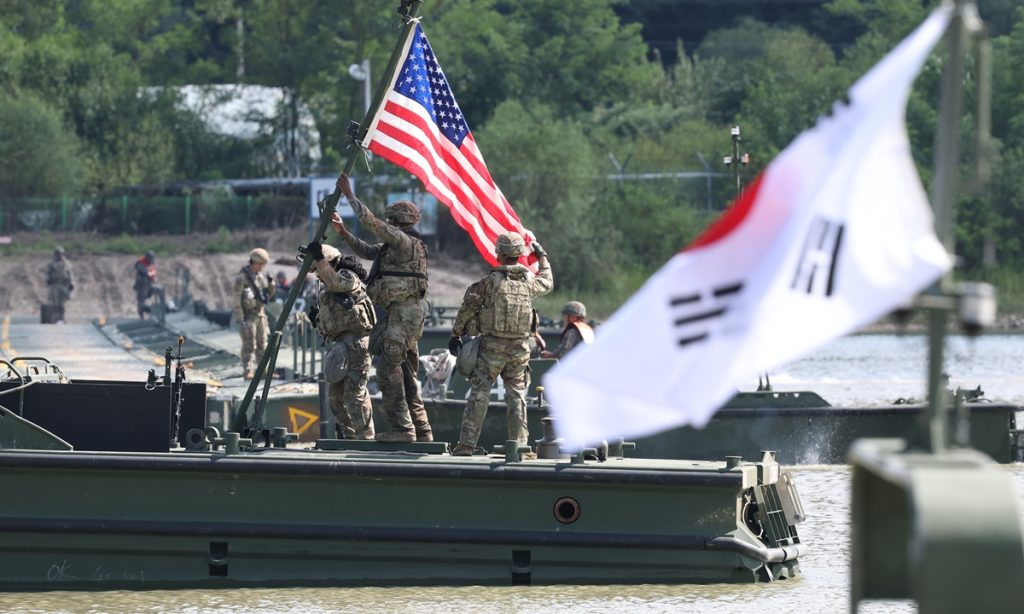
US-based Stars and Stripes reported that in mid-September drills featuring the USS America amphibious assault ship along with warships from South Korea and Canada were "in response to continuing tension with North Korea." The same report noted that the US and South Korea have carried out a number of exercises this summer alone around the Korean Peninsula. 

However, nowhere in the article was there any mention of the source of this "continuing tension."

Following the drills, a reenactment of the September 15, 1950 "Operation Chromite" amphibious assault was conducted, linking the recent US-led military drills to the US-led Korean War of the 1950s. The persistent presence of foreign military forces on North Korea's borders, including frequent military exercises off its coasts, has driven tensions on the Korean Peninsula ever since the armistice was signed in 1953. 

The US military presence in South Korea as well as Washington's interference in South Korea's internal political affairs and what is essentially the political capture by Washington of Seoul, has artificially maintained distrust, distance and military tensions between North Korea and South Korea. 

Over the decades, when Washington has found itself distracted from East Asia, tensions between North Korea and South Korea almost always ease and in some cases, quite significantly, demonstrating just how central the US military occupation and political capture of South Korea are to driving tensions on the peninsula.  In fact, maintaining artificial tensions on the Korean Peninsula is a pretext for an enduring US military presence on China's doorstep across the Yellow Sea. 

Together with US military bases stretching across Japanese territory and now as far south as the Philippines, the US presence in South Korea is clearly just one part of a larger policy of encirclement and containment of China. While the US cites "continuing tensions with North Korea" as a pretext for its military presence in South Korea, it is clear the primary purpose for it is to encroach upon China. 

This is a long-standing US foreign policy objective stretching all the way back to the end of World War II. In fact, in a 1965 memorandum from then US secretary of defense Robert McNamara to then US president Lyndon B. Johnson titled, "Courses of Action in Vietnam," it was admitted that US' continued pursuit of war in Southeast Asia only "made sense" if it was "in support of a long-run United States policy to contain Communist China." 

The same memorandum also noted the three primary fronts the US would concentrate on in order to contain China including the "Japan-Korea front," along with India-Pakistan as well as Southeast Asia. From when this memorandum was written in 1965 to the present day, it is clear that the US government, regardless of who occupied either the White House or Congress, has pursued the containment of China across these three fronts and beyond. 

The containment of China does not benefit the nations along these three fronts, including South Korea. Seoul has been forced repeatedly to sign onto Washington's many anti-China projects including more recently the CHIPS Act which threatens South Korea's extensive cooperation with China regarding semiconductors. South Korea now finds itself on the losing end of Washington's broadening confrontation with China. Seoul, understanding it had no choice but to sign the Act, has since asked Washington for exceptions from provisions within it that would surely cripple South Korea's own semiconductor industry. The Act is clearly designed not only to hurt and hinder China's technological development, but also that of Washington's supposed "partners" including South Korea. 

Beyond semiconductors, China is actually South Korea's largest trade partner in terms of both imports and exports. Thus, each provocation Washington recruits Seoul into joining, such as hosting US nuclear-powered and armed submarines in its ports, is a provocation jeopardizing South Korean trade and its overall economic well-being. 

While the recent US-led drills in the Yellow Sea were conducted "in response to continuing tensions with North Korea," when one considers it is the US military presence in the region primarily driving those tensions, we see that the drills are creating the problem, not creating a solution. While the Western media attempts to portray South Korea as an ally or partner, considering the true nature of Washington's relationship with Seoul, it seems more appropriate to describe South Korea as a hostage.  

It is an added irony that China's large economic partnership with South Korea helps temper the worst impulses of a US-influenced Seoul. The stronger China becomes, the less likely the US will be able to continue holding the threat of chaos over the region's head to continue justifying its military presence, and all that it entails, across the region. 

Hangzhou Asian Games a big day for the whole of Asia: Global Times editorial

The opening ceremony of the 19th Asian Games will be held in Hangzhou, China on Saturday evening. Chinese President Xi Jinping will attend the opening ceremony and declare the opening of the games. This is a big day for the whole of Asia. More than 12,000 athletes from 45 countries and regions across the continent are participating. It is the largest and most comprehensive Asian Games in history. First of all, it is a sports event in Asia with global influence. Athletes from various countries and regions in Asia fight hard on the field and compete with their best skill and spirit. It is not just a sports event. When the international situation is complex and tense, Asia cannot be an exception. The successful hosting of the Asian Games has made the world generally feel the appeal of unity and friendship, which has positive significance for the entire Asia and even the world.

Chinese people generally have special emotions and memories about the Asian Games. The three Asian Games represent the three important junctures for China as it embraced the world. The 1990 Beijing Asian Games was the first comprehensive international large-scale sports event held by China. It greatly inspired the patriotism and pride of Chinese society. Chinese people who experienced that era still remember it vividly. Twenty years later, at the 2010 Guangzhou Asian Games, the world marveled at a highly open Guangzhou and China's economic miracle. Today's Hangzhou Asian Games fully demonstrates the maturity and steadiness of a big country in the concept of "green," "intelligent," "frugal," and "civilized." This is a manifestation of China's responsibility as a major country.

No one will doubt the level of organization and the splendor of the Hangzhou Asian Games. Last month, Chengdu successfully hosted the 31st Summer World University Games. Last year, Beijing successfully hosted the Winter Olympics. Before that, there was the 2008 Beijing Summer Olympics. The international sports events hosted by China at different times and in different cities have different local characteristics and flavor of the times. They show different levels of splendor, but leave the same deep impression on the world. "China-held" international sports events have become a well-known brand. It provides the best competition venues and environment for athletes from all over the world, and has left many scenes and records for the world that will be engraved in history.

This can also be seen as a new moment of unity in Asia. It brings together members of the Olympic Council of Asia (OCA) and elevates the sense of Asian consciousness and unity to new heights. Unlike the Olympic Games, the Asian Games have carried the significance of Asian nations' sovereign independence and unity since the inception. Beyond competitive sports, they serve as a spiritual vessel for the most populous, vast, and diverse continent in the world to come together and move forward.

As a bridge for communication, reconciliation, and friendship, the Asian Games not only showcase the strength of the athletes but also provide strength for unity and cooperation in Asia and the world. This spirit and strength have been consistently supported by China and are worthy of collective appreciation by all.

In recent years, through the collective efforts of various countries and regions in Asia, the continent has achieved remarkable success in terms of peace and development. It cannot be denied that today, the overall environment for cooperation and development in Asia is facing unprecedented challenges. Under the incitement of external forces, there have been both evident and potential rifts within Asia, with signs of differentiation and division becoming increasingly pronounced. The looming shadow of a "new cold war" adds to the complexity.

Asia is currently at a crossroads and a pivotal moment in its history. The choices made now will determine the destiny of Asia in the future. The Asian Games, on its sporting stage, actually points to a promising path for Asia, which is one of striving for progress and unity in collaboration.

As the opening of the Asian Games approaches, many Chinese people once again sing the song "Asian Treasures" from 1990 when China hosted the Asian Games for the first time. "In our Asia, mountains are our heads high." The powerful lyrics and melody of "Asian Treasures" resonate strongly, providing a vivid and powerful summary of that era in Asia and an accurate vision of the future of Asia. The impact of the "Four Asian Tigers" and the "Four Asian Dragons" and the rapid development of China's economy truly exemplified the sentiment of "Asian Treasures."

While enjoying the exciting events at the Hangzhou Asian Games, let us also rekindle the courage and enthusiasm of the "Asian Treasures," allowing the spirit and influence of Asia to continue to resonate across the continent.

Manila should be aware of the perils of acting as a US stick to muddy South China Sea

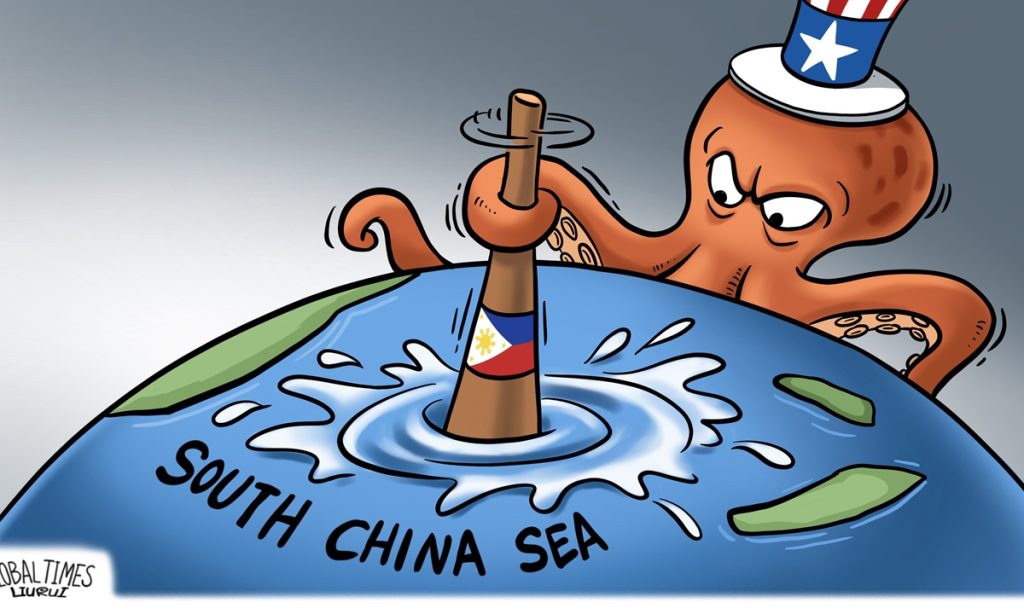
The Philippines is regarded as a key component in the US Indo-Pacific Strategy. But compared to Tokyo and Canberra, which take on more aggressive roles, Manila, in the heart of Washington, is merely a stick used to muddy the waters of the South China Sea. In other words, the US aims to use the Philippines to continue escalating the China-Philippines dispute in the South China Sea and disrupt the friendly atmosphere of consultation between China and Southeast Asian countries on the South China Sea issue.

The Philippines on Friday condemned China, stating that a Chinese coast guard ship on Wednesday came within a meter of colliding with a Philippine patrol ship near Ren'ai Reef. It accused China of conducting "the closest dangerous maneuver."

Beijing and Manila have already had several rounds of clashes in the South China Sea in recent months. This time, the Philippines' actions have once again confirmed a concerning trend: It has joined forces with the US to stir up new troubles in the South China Sea, becoming a destabilizing force in the Asia-Pacific region.

Under the general context of the Joe Biden administration's push for military and political cooperation with the Philippines based on the US Indo-Pacific Strategy, Philippine President Ferdinand Romualdez Marcos Jr abandoned his predecessor's rather friendly policy toward China after he came to power. Instead, he focused more on using the enchantment of ties with the US to promote the development of his country's military capabilities, hoping to consolidate domestic support. In addition, by constantly provoking troubles with China in the South China Sea, Manila wants to test how strong the US-Philippines alliance is.

As tensions between China and the Philippines in the South China Sea grow, Washington and Manila kicked off Maritime Training Activity Sama Sama 2023 off the Philippine coast on Monday. The main character in these military drills that will run through October 13, in fact, is still the US, which is purely exploiting the Philippines' close geographic location to China and its South China Sea disputes with China. Under the pretext of "addressing a spectrum of security threats and enhancing interoperability," Washington is targeting  China through the Sama Sama drills.

Seeking to form more closed, confrontational minilateral mechanisms in the region similar to the Quad and AUKUS, Washington is glad to see Manila play a certain role in the vision of its Indo-Pacific Strategy. However, once the Philippines decides to tie itself up to the US' chariot, it will certainly go against the idea of ASEAN as a whole - These countries don't want the region to become a battleground for great power competitions, nor do they want to become proxies for great powers.

During the Rodrigo Duterte administration, the pragmatic and win-win cooperation between China and the Philippines has contributed much to the development of China, and the Philippines especially. If the Marcos Jr administration continues to drift off course in the South China Sea, turning the region into a sea of instability and driving China-Philippines relations into the vortex of conflicts, a disaster for the Philippines is inevitable, which will bring new uncertainties to bilateral ties and regional stability.

Chinese military expert Song Zhongping told the Global Times that if the Philippines, at the instigation of the US, turns into a bridgehead against China, it could become a battleground if the conflict escalates and this will plunge the country into the abyss of irretrievable losses. Therefore, the Marcos Jr administration needs to realize that the Philippines is only a pawn of the US and that Washington cannot be trusted. 

It is not China that has pushed the Philippines toward the US, but the US that has forced ASEAN countries, particularly those that have disputes with China, to pick a side. China has never and will never pressure any ASEAN country, including the Philippines, to make a choice between siding with China or the US. As a peace-loving country, it always pursues to set aside the disputes in the South China Sea. At the same time, the direct communications channel between China and the Philippines over the South China Sea issue is still open, while Beijing has shown willingness to proactively engage in dialogues with Manila.

China and ASEAN countries should carry on with consultations on the Code of Conduct in the South China Sea, to strengthen bilateral cooperation and turn the South China Sea into a sea of peace, stability and win-win cooperation, instead of becoming a region of conflict and trouble under the constant involvement of extraterritorial countries.

India's concerns over the Maldivian election result reflect its strategic self-doubt

The Maldivian presidential election concluded recently with Mohamed Muizzu winning 54 percent of the vote, making him the newly elected president of the Maldives. His campaign slogan, "India Out," has sparked extensive speculation in Indian media that he is pro-China, which could potentially harm India's strategic interests in South Asia and the Indian Ocean. India places great importance on its relationship with the Maldives. The Indian Ministry of External Affairs (MEA) described India's position in the Maldives as "pre-eminent," with relations extending to virtually all areas. However, the excessive focus on the newly elected Maldivian president reflects India's strategic self-doubt, as it has long emphasized the so-called Chinese threat in strategic terms.

When considering bilateral issues, India should do more self-reflection rather than fabricating a "Chinese threat" out of thin air. The "India Out" movement in the Maldives began as early as 2020, reflecting widespread dissatisfaction among Maldivians with India. 

Maldivians believe that India's longstanding military presence in their country is a threat to their sovereignty. India maintains a military presence in the Maldives to operate the Dornier aircraft and two helicopters gifted to Male in 2020 and 2013, respectively. In November 2021, the Maldives National Defence Force (MNDF) had informed the parliamentary committee on security services that 75 Indian military personnel were stationed in the Maldives to operate the aircraft and choppers. 

In addition to its military presence, India has assisted in building a new police academy in the Maldives, which houses the Maldives National College of Policing and Law Enforcement. Some believe this could interfere with the Maldives' independent law-enforcement authority. 

The Maldives is also concerned about India's involvement in the development of Uthuru Thila Falhu, an island near the capital, Male, which is part of the two countries' defense cooperation. In 2021, the countries signed an agreement to develop and maintain a coast guard harbor and dockyard at Uthuru Thila Falhu. The island is a point to watch the incoming and outgoing traffic at the main port in Male, which has a highly strategic position.

While security cooperation between the Maldives and India has a long history, from the Maldives' perspective, such cooperation should be based on mutual equality, rather than actions that may infringe on national sovereignty. The strong call for "India Out" in the Maldives does not necessarily equate to "China In" as there has been no "China In" movement thus far. India views the Maldives as a strategic outpost in the Indian Ocean, but it is not necessary to always perceive China as an imaginary enemy. Such behavior only highlights a lack of strategic confidence.

China has long pursued cooperation with neighboring countries based on the principle of mutual benefit. China does not interfere in the domestic affairs and strategic autonomy of other countries. China's cooperation with the Maldives primarily focuses on improving livelihoods and social development, such as upgrading and constructing major international airports in the Maldives and building the China-Maldives Friendship Bridge.

India has maintained a "big brother" mentality in dealing with South Asian affairs, considering the region as its backyard. Whether India can treat South Asian countries, including Bangladesh, Nepal, the Maldives and Sri Lanka, as equals has been a question mark for a long time. On the surface, India follows a "neighborhood first" policy and plays a leading role in South Asian affairs. However, in reality, India leverages its geopolitical advantage and size in the region to compel South Asian countries to make choices that favor India on critical issues.

India is eagerly awaiting the "Indian Century." New Delhi has hosted numerous diplomatic events around the G20 summit this year, striving to present itself as a major global power with significant achievements. 

Meanwhile, India has been assertive in handling its diplomatic relationships, such as cracking down on Chinese companies in India and imposing obstacles for Chinese citizens to obtain visas. However, the excessive attention on the Maldivian election result reflects India's self-doubt from another perspective. India needs to adjust its mind-set. Strategic self-doubt and excessive suspicion of China do not benefit India's aspirations for a major global role.

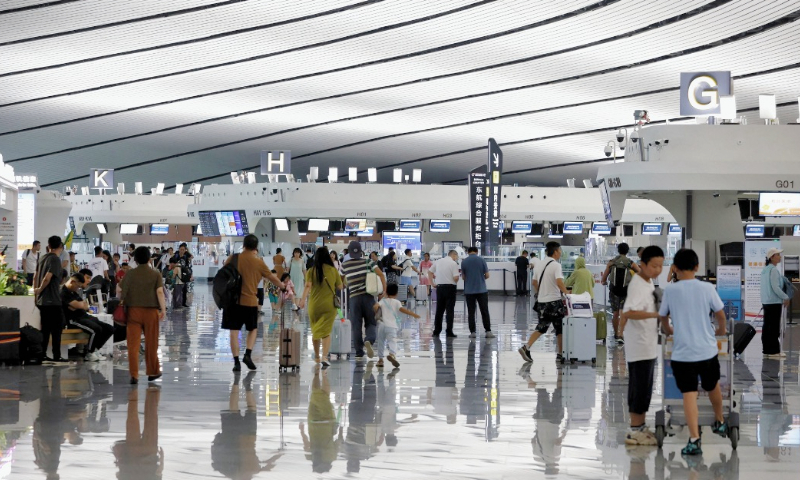
Beijing Daxing airport celebrates fourth anniversary amid aviation recovery

Beijing Daxing International Airport had its fourth anniversary on Monday, having been put into operation on September 25, 2019. It had notched more than 80 million passenger trips as of Sunday, the airport said.

The airport has had a total of 682,900 flight takeoffs and landings, a passenger throughput of 82.48 million trips, and a cargo throughput of 557,300 tons, the airport added.

Daxing airport restarted international passenger flights in January this year, and has made efforts to expand routes to Europe, North America, Japan and South Korea, while continuously expanding into the Southeast Asian and Oceanian markets.

As of the end of August, the airport has opened a total of 202 routes, covering 185 destinations in 18 countries and regions.

The airport conducted 7.94 million passenger trips in the two months' summer travel rush that ended on August 31, up 163 percent from the same period last year and the best performance in the summer travel rush since the airport opened.

The Civil Aviation Administration of China is accelerating the resumption of outbound travel.

The number of international passenger flights per week has recovered to 52 percent of the 2019 level, and the number of countries with passenger flight connectivity has recovered to nearly 90 percent of pre-pandemic levels, the administration said earlier this month.